Introduction
Even with the abundance of random chat and anonymous social applications available today, Chatous continues to show up in search results for terms like “interest-based chat,” “random matching,” and “anonymous chat.” Once thought of as an alternative to Omegle and Chatroulette for text chat, Chatous is a chat platform that prioritizes anonymity and interest-based matching. What is Chatous? How to use it? What about its drawbacks? And is it still appropriate for consumers today? This article will provide a systematic and objective analysis of Chatous.
What Is Chatous?
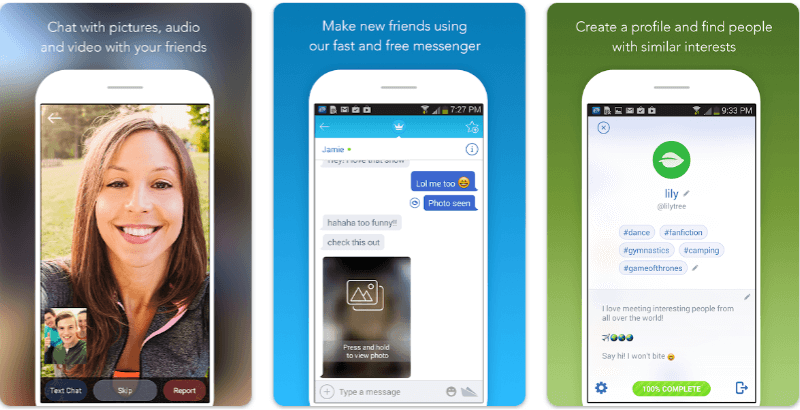
Chatous is not a social network. It’s a utility. Its entire premise is a simple trade: you get anonymous, text-based conversation filtered by a hashtag. Just open the Chatous website or app, then pick a tag, you get a stranger. That’s the entire transaction.
Getting Started: The First Five Minutes
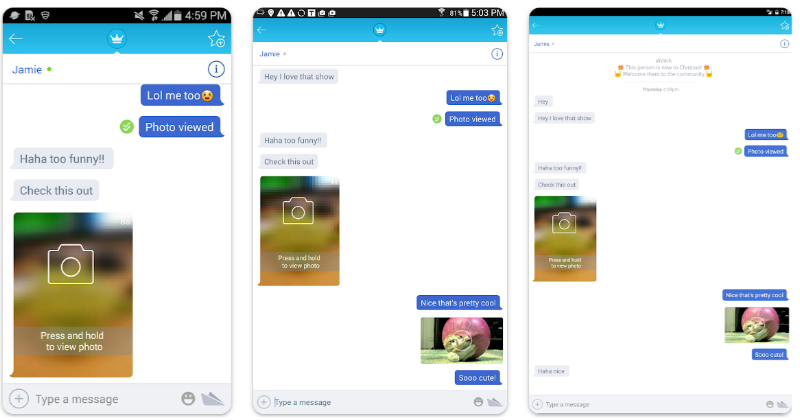
😉First Look at Chatous
The Chatous login process is minimal, which is a plus. You can chat in under a minute. You’ll see two key boxes: one to enter your interests as hashtags and a big button to start chatting. This simplicity is its greatest strength.
😋Choose Hashtags
Here’s the critical first decision: your hashtags. This is the only control you have. Typing “#music” is a recipe for disaster—you’ll match with everyone and no one. You must be specific. The tag doesn’t guarantee a good talk, but a vague tag almost guarantees a bad one.
😃The Anatomy of a Chatous Conversation
-
A Chatous online session unfolds in a predictable pattern. You connect and see a blank text box and your partner’s chosen display name. The first message is everything.
-
If you type “hi” or “hello,” the conversation often ends there. The platform’s culture rewards directness. This does two things: it confirms you’re a real human who actually cares about the tag, and it gives the other person something concrete to answer.
☺️Use Next button
The chat itself is a black box. You might discuss Japanese woodworking tools for 45 minutes with a carpenter from Oslo. You might get a three-paragraph rant about a favorite book. Or, you might get a single-word response before they vanish. The anonymity means there is zero social cost to leaving. People disconnect mid-sentence. You must develop a thick skin and do the same when a chat isn’t serving you. The “Next” button is your most used tool.
The Persistent Problems of Chatous
No review of Chatous is honest without stating this clearly: you will encounter garbage. The low barrier to entry attracts spammers. The platform has report functions. This is a routine part of the Chatous random chat experience. You are the frontline content moderator.
Another issue is inactivity. You can be matched with someone who simply never responds, perhaps because they left the app open. Or, you’ll get the “typing…” indicator forever. You learn to wait about 30 seconds before moving on. This isn’t a flaw of the app’s code, but a feature of its anonymous, low-commitment design.
Who is Chatous Suitable for?
-
The Niche Hobbyist: You have an interest too specific for mainstream forums (e.g., modularsynths, medieval calligraphy). Chatous becomes a live, global search engine for the one other person online right now who gets it. The value here is immense but rare.
-
The Casual Language Practitioner: You’re at an intermediate level and want unstructured practice. Tags like #practicefrench or #learnjapanese can work. However, you must state your goal immediately and accept that 80% of matches won’t be serious. It’s inefficient but can yield great, unscripted dialogue.
-
The Digital Walker: You have 15 minutes to kill and are curious about a random slice of global human thought. You’re not seeking an outcome, just observation and momentary interaction.
Safety: Non-Negotiable Rules
Your safety is your responsibility. The rules are simple but absolute:
-
No Personal Information: Never share your name, location, job, school, or social media handles. Create a disposable online persona and stick to it.
-
No Link-Clicking: Treat any link sent to you as hostile. Do not click.
-
No Platform Migration: If someone asks to move to WhatsApp, Telegram, or Instagram, decline and disconnect. The scam attempts almost always follow this script.
-
Instant Exit: The moment you feel pressured, uncomfortable, or simply bored, leave. You owe the anonymous stranger nothing.
A Practical Survival Guide for New Users
If you decide to give it a try, your success depends entirely on your strategy. Here are some useful tips:

💜Master the Hashtag Game.
Be hyper-specific. #music is useless. Try #dreampop or #vinylcollector. The more niche your tag, the higher the chance of a good match.
💙Your Opener is Everything.
Never, ever start with just “hi.” Lead with a question about the shared tag. “What’s the last great #abstractphotography exhibit you saw online?” This immediately signals you’re there for actual conversation.
💚Guard Your Privacy Relentlessly.
This is non-negotiable. No real names, no social media handles, no town names, and absolutely no financial details. The power of Chatous is the disposable identity and just use it.
🧡Embrace the “Next” Button.
The moment a chat feels off, boring, or intrusive, disconnect without a second thought. The entire design is built on transient connections.
Final Conclusion
As a random online chat platform, Chatous’s value is entirely in its constraints: anonymity, text-only, hashtag-driven. These constraints filter out the performance of social media, allowing for raw, if inconsistent, interaction. It’s not a community. It’s a series of disconnected, anonymous rooms. Some are empty, some are strange, but once in a while, you find one where someone is talking about exactly the thing you wanted to hear.
FAQs
Q: How do I actually have a good conversation?
Use hyper-specific hashtags. Start with a direct question about the tag, not a greeting. Be prepared to “Next” 5-10 times to find one engaged person. Patience is mandatory.
Q: What if I get mostly bots and ads?
This is a common experience. Using very niche tags can help avoid broad-net spam bots. Always report them before disconnecting.
Q: Can I use Chatous on my desktop computer?
Yes, the Chatous website functions in a browser. The experience is nearly identical to the mobile app, sometimes preferable for longer typing sessions.
Q: Is there a way to keep talking to someone good?
The platform is deliberately designed against this. You can suggest moving to another platform with extreme caution, but this contradicts the core anonymous, safe-use rules. Assume every chat is a one-time interaction.
Q: How do I actually stay safe?
Beyond not sharing personal info, trust your gut and use the tools. The second someone asks for money, a photo, or your Instagram, hit “report” and then “next.” The platform’s safety relies heavily on user reports, so use them. Also, consider your tags—broader tags like #chat attract more spam.
Q: Can I really use it to practice a language?
Of course you can, but manage expectations. It’s excellent for casual, unstructured practice and picking up slang. It’s terrible for structured learning. Be upfront in your tag (e.g., #practicefrench) and be prepared for many matches to not be serious about it.
Q: What are some common Chatous alternatives?
Common sites like Chatous include Pink Chat, Chatroulette, Chatrandom, Jerkroulette, ChatMatch, and Tinychat, each offering different features in areas such as random chat, video conversations, and interest filtering.